 6 min
6 minWhat you’ll learn in this article
Running an online store isn’t for the faint of heart. Between juggling customer support, managing inventory, and keeping your marketing campaigns alive, it can feel like you’re starring in a one-person circus act. That’s exactly why ecommerce automation has become a must-have for modern businesses, it keeps your operations running smoothly even when things get hectic.
That’s where automation steps in, to take the repetitive, time-consuming tasks off your plate so you can focus on strategy, creativity, and growth. 🚀
In this article, we’ll unpack what ecommerce automation is, how it can benefit your business, and walk through six practical examples you can start using today.
What is ecommerce automation?
In short, ecommerce automation means using apps and integrations to handle repetitive tasks automatically, like sending order updates, tagging customers, or restocking inventory.
Instead of manually doing all that (and slowly losing your mind), automation connects your favorite apps, such as Shopify, WooCommerce, Pipedrive, and Google Sheets, so data flows seamlessly between them.
With integration platforms like Pluga, you can create these automations in minutes, no code required. Just set your trigger (e.g., “new order created”) and the corresponding action (e.g., “send invoice via email” or “add customer to CRM”).
The result? A smoother, faster, and more profitable online business. 😉
Why ecommerce automation matters
Automation isn’t just a “nice-to-have” anymore, it’s a serious competitive edge for every online business. When used strategically, it helps your store run like a well-oiled machine, without extra hours or stress.
Here’s how it impacts your business in meaningful ways:
It saves time and boosts productivity
Ecommerce automation takes care of all the repetitive work, like sending payment confirmations, tracking shipments, and tagging orders, so your team can focus on tasks that actually move the needle. Instead of wasting time on manual admin, you get more time to plan, test, and innovate.
It reduces human errors
Manual processes often lead to mistakes: missed orders, wrong customer details, duplicated data. Automation ensures every workflow follows a consistent pattern, reducing errors and keeping your operations clean and accurate. That means happier customers and fewer “oops” moments.
It improves customer experience
Automation keeps your communication sharp and timely. From personalized post-purchase emails to proactive support messages, your customers always feel seen and valued. The result? Stronger loyalty and more repeat purchases.
It helps you scale without chaos
Scaling manually usually means more hires and more stress. With automation, your store can handle higher order volumes, more marketing campaigns, and bigger customer bases, all without doubling your workload.
It increases revenue potential
Automated cross-sells, upsells, and cart recovery flows bring customers back and increase order values. Instead of chasing every sale, automation helps you capture more opportunities automatically.
6 ecommerce automation examples for your business
Now that you know why automation matters, let’s see how it looks in real life. These six examples show how smart workflows can save time, improve customer experience, and drive growth, all while you sip your well-earned coffee. ☕
1. Abandoned cart recovery
You’re checking your dashboard, feeling good about your traffic… until you spot a few lonely carts, just sitting there. They were this close to checking out. Automation can be the gentle push they need to come back and finish what they started.
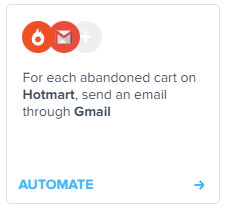
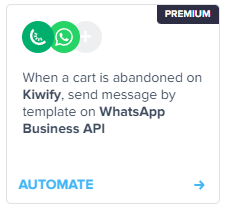
With apps like Mailchimp, Gmail, Outlook and WhatsApp Business you can send a friendly reminder to anyone who leaves items behind. Sometimes, that tiny nudge is all it takes. 😉
And it doesn’t stop there, with this workflow, you also:
- Recovers revenue you’d otherwise lose;
- Keeps your brand top-of-mind;
- Works quietly in the background, 24/7.
Look at some Pluga’s integration examples for automating this process:
2. Automated order updates
Picture this: you’re processing dozens of orders in a single afternoon. Between updating stock, confirming payments, and manually sending “order received” messages, something’s bound to slip.
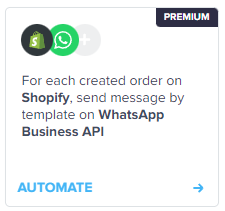
That’s where automation saves the day. As soon as a new order is created in Shopify or WooCommerce, an automated email or WhatsApp message goes out to your customer, instantly, every time.
Talking to your customers is important, but this automation does more than that:
- Builds trust through quick communication;
- Reduces manual tasks for your support team;
- Keeps your customers in the loop (and off your inbox).
Pluga’s integration for automating order updates:
3. Inventory management and alerts
Ever run out of a best-seller right before a promo? Then you know the pain, a rush of traffic, and… “Out of stock.” 😩
With automation, you can trigger alerts or update a shared Google Sheet the second your inventory dips below a safe level. Better yet, automatically notify your supplier or logistics partner to start replenishing.
If you’ve ever been there, you know how crucial it is to:
- Prevents missed sales opportunities.
- Keeps your team ahead of shortages.
- Simplifies restocking coordination.
This keeps your operations lean, efficient, and accurate with no more guesswork or outdated spreadsheets.
Below, you will find some automation examples for this situation. Click and start!
4. Personalized marketing campaigns
Think about your most loyal customers, the ones who come back month after month. How often do they get a thank-you note or a small surprise? Probably not as often as they should, right?
Automation can change that. Every time a customer hits a specific purchase milestone, they automatically receive a discount code, a thank-you email, or even early access to new products.
In the end, it’s all about making your customers feel special. This automation helps you:
- Deepens customer relationships;
- Encourages repeat purchases;
- Adds a personal touch without extra effort.
💡Pro tip: You can connect two apps or more via Pluga and make this process fully automated, nurturing leads while you sleep.
Automation examples:
5. Syncing your CRM and ecommerce data
Manually logging customer data after every sale isn’t just time-consuming, it’s risky. One small typo, and your entire customer journey tracking goes off the rails.
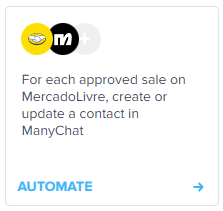
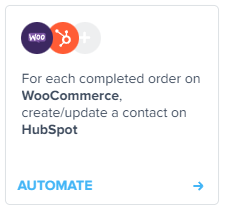
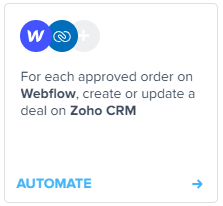
With ecommerce automation, each new sale in your store can instantly create or update a deal or contact in your CRM (like Zoho CRM or HubSpot), ensuring your marketing and sales teams always have fresh, accurate data.
If you’ve ever lost hours fixing a messy funnel or updating data by hand, you know how valuable this is. With this automation, you:
- Keeps your sales funnel aligned and up to date.
- Saves hours of repetitive admin work.
- Reduces the chance of human error.
6. Automated review requests
Between your site chat, email, and Instagram DMs, feedback tends to scatter everywhere, and valuable insights get lost in the chaos.
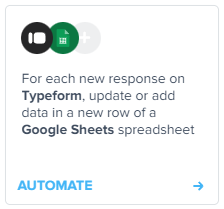
By connecting your forms (like Typeform or Google Forms) to a central hub such as a spreadsheet or CRM, you collect every response automatically and keep your data organized.
Customer feedback fuels your growth, and automation ensures you never miss a beat. It helps you:
- Gives you a clear view of customer satisfaction.
- Helps you spot trends and act faster.
- Makes reporting and follow-up a breeze.
Read more:
- AI for sales teams: how artificial intelligence is transforming revenue results
- What is API integration and why it matters for your business
- CRM integration with WhatsApp: how this duo can help you sell more
The real impact: more growth, less busywork
When you automate your ecommerce business, you’re not just saving time, you’re creating a system that scales itself.
With platforms like Pluga, setting up these automations takes minutes, not hours. You can choose from ready-to-use templates or build your own custom workflows.
Imagine: fewer manual tasks, happier customers, and a team that can focus on strategy instead of spreadsheets.
That’s the power of ecommerce automation.
FAQ
Ecommerce automation is the process of using technology to handle repetitive tasks — like managing inventory, processing orders, or sending marketing emails — automatically. It helps businesses save time, reduce errors, and improve efficiency.
Start by identifying repetitive tasks that take up too much time,like order notifications, email follow-ups, or CRM updates. Then, use tools like Pluga to connect your favorite apps and set up no-code workflows that run automatically.
Not at all. Tools like Pluga make it easy and affordable to automate without technical skills. You can start with free plans or pre-built templates and scale your automations as your store grows.